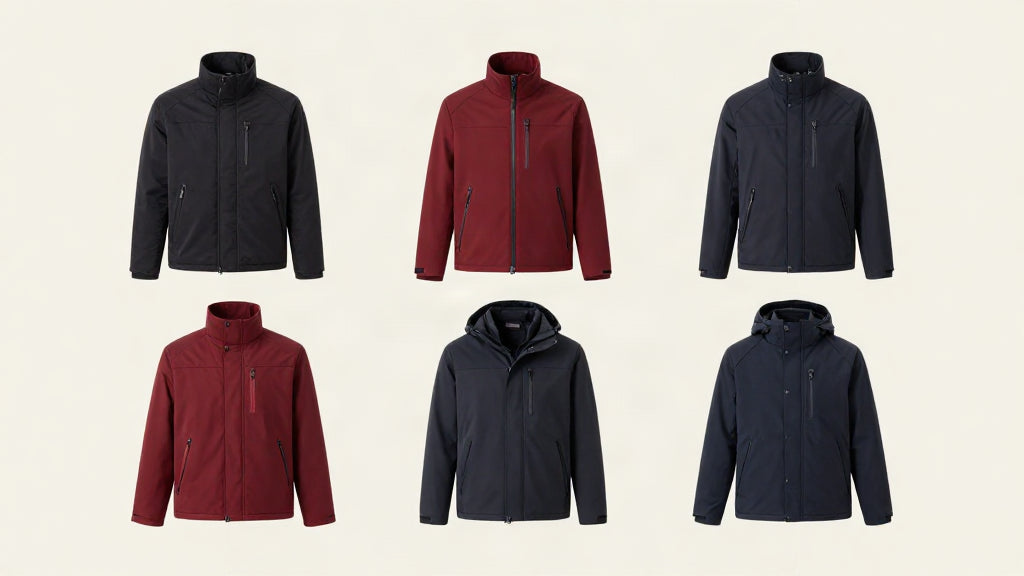
How to Choose the Right Winter Jacket: Warmth, Fit, Material and Everyday Use

Buying a winter jacket sounds simple until you're actually standing in front of ten of them, all claiming to be warm, all looking roughly the same from a distance. The truth is that "warm" isn't one single quality. A jacket can be warm and useless for daily life, or stylish and hopeless the moment it actually gets cold. Picking the right one means looking at four things separately, warmth, fit, material and everyday use, rather than judging a jacket on how it looks on a hanger.
We went through the men's autumn winter 2026 collection to pull out real examples that show these differences clearly, covering three genuinely different approaches to a men's Made in Italy winter jacket, one from Barbour, one from Peuterey, one from RRD, and used them to walk through what actually matters when you are choosing.
The Four Things That Actually Matter
|
Factor |
What to actually check |
|
Warmth |
The insulation type, not just how thick the jacket looks |
|
Fit |
Room for a knit or shirt underneath, without looking bulky |
|
Material |
Whether it's built for wind, rain, cold, or all three |
|
Everyday use |
Whether you will actually wear it daily, or just on the coldest days |
Most people only check the first one, or worse, just how the jacket looks in a photo. All four matter, and they often pull in different directions.
Warmth Isn't One Thing
There are really two separate questions hiding inside "how warm is this jacket." One is how well it holds in your own body heat. The other is how well it blocks wind, rain and cold from getting through in the first place. A jacket can be excellent at one and only average at the other, and the best winter jackets are usually the ones that balance both rather than maxing out just one.
Down insulation, the kind used in the Peuterey Keke blouson jacket, is a good example of the first kind of warmth. This jacket uses certified natural down padding, which traps body heat extremely efficiently for its weight, that's the whole appeal of down. On top of that, it's finished with a PFC-free water-repellent treatment, so it also handles light rain and damp air without soaking through, covering both sides of the warmth equation at once.
Material Decides What the Jacket Is Actually For
This is where a lot of people get it backwards, choosing a material because it looks good rather than because it matches what they'll actually be doing in it. A quick way to think about the main options, using three real pieces from the collection.
|
Material |
Jacket |
What it's built for |
|
Waxed cotton |
Everyday wear in mixed weather, wind and light rain |
|
|
Certified natural down |
Genuinely cold, dry days where warmth matters most |
|
|
Technical padded shell |
Wide range of winter conditions, built for movement |
Barbour men's waxed jacket
The wax coating on the Barbour Merchant Wax isn't what keeps you warm, it's there to block wind and water. The actual warmth comes from the quilted nylon lining underneath. It's a two-part system rather than a single insulating layer, described by the brand as a simple, robust, medium-weight jacket built for durable, everyday wear rather than occasional statement dressing. That's exactly why waxed jackets tend to feel like a slightly different kind of warm compared to a down piece, more of a shield than a wrap.
Men's technical winter jacket
RRD (Roberto Ricci Designs) built its whole identity around technical, water-repellent, Made in Italy clothing, and the Superrduck Tubic 14 hooded jacket is a good example of that approach applied to real winter cold. It's a padded, hooded blouson built with RRD's own technical insulation rather than classic down, aimed at people who want serious warmth without losing ease of movement, more sport-technical than heritage.
Fit Changes More Than You'd Think
A winter jacket has to fit two versions of you, the one wearing just a t-shirt on a mild day and the one wearing a chunky knit underneath on a genuinely cold one. Buy it too fitted and the second version never happens comfortably. Buy it too loose and it stops looking intentional.
A few practical fit checks worth doing before buying:
-
Raise your arms overhead. If the hem rides up past your waist, the jacket is either too short or too fitted through the body.
-
Check the shoulder seam. It should sit right at the edge of your shoulder, not halfway down your arm or pulling inward.
-
Try it with a knit on. A jacket that only fits over a t-shirt isn't really a winter jacket, it's a mild-weather one.
-
Look at the sleeve length last. Sleeves that are slightly long are far easier to live with than sleeves that are slightly short.
Everyday Use Is the Question Most People Skip
A jacket that only gets worn five times a winter isn't really doing its job, no matter how good it looks in the wardrobe. Ask yourself honestly how you'll actually use it before buying. A jacket for the daily commute has different priorities than one for the occasional weekend hike or a smart dinner out, and trying to make one jacket do everything usually means it does nothing particularly well.

Layering Underneath
The jacket is only half the equation. What you wear under it changes how the whole system performs, and this is where a good men's wool sweater winter piece earns its place.
-
The RRD Maxell round knit in merino insulates well without adding bulk, which matters if you also want the jacket to close properly on top of it.
-
The Lacoste long-sleeve knit polo is a strong pick if you want a Lacoste men's winter polo that reads slightly smarter than a plain crew neck, useful for the days a jacket comes off indoors.
A rough layering guide:
-
Cold, dry day: merino knit plus the down jacket, since both pieces are working on trapping heat.
-
Wet, windy day: the knit polo plus the waxed jacket, since the wax and lining are doing the weatherproofing work instead.
-
Genuinely freezing day: either knit, layered under the RRD technical shell, for warmth and wind protection together.
Completing the Look
A winter jacket doesn't exist in isolation, and the right footwear changes how the whole outfit reads. Premiata sneakers autumn winter styles are a genuinely good match here, the Premiata Lauryn 8186 sneaker works well under a waxed or technical jacket without tipping the look too formal. For something with a bit more polish, Philippe Model's Tropez Haute sneaker leans dressier, closer to men's leather winter shoes territory while still being comfortable enough for daily wear.
Women shopping this season have just as much to work with. Barbour and Peuterey both carry a women's winter down jacket lineup alongside the men's pieces above, and Copenhagen Studios' minimalist sneaker aesthetic pairs cleanly with almost any of them if a sportier finish is the goal.
Frequently Asked Questions
1. Is down always warmer than a waxed or technical jacket?
For its weight, yes, down is extremely efficient at trapping heat. But warmth isn't only about the fill—wind and water resistance matter just as much, which is why a well-made waxed or technical jacket can outperform a down piece in wet, blustery conditions even if it feels lighter.
2. How do I know if a jacket is going to be too warm for daily wear?
If it's designed purely around maximum insulation rather than everyday versatility, it likely will be. A jacket like the Barbour piece, built as a medium-weight everyday layer, tends to work across more days than one built purely to handle extreme cold.
3. Should I size up to fit layers underneath?
A little room helps, particularly through the shoulders and chest, but sizing up dramatically usually just makes the jacket look ill-fitting on the days you're not layering. Try it on with a knit before deciding.
4. Does a water-repellent finish mean the jacket is fully waterproof?
No, and it's worth knowing the difference. Water-repellent treatments, like the one on the Peuterey jacket, protect against light rain and damp conditions, not sustained heavy rain the way a fully waterproof shell would.
5. Is a winter jacket a reasonable elegant men's fashion Christmas gift?
It can be, provided you already know their size and general style. A jacket is a big, visible gift, which makes it a good one when you're confident, and a risky one when you're guessing. A merino knit or polo is a safer gift-giving fallback if you're not certain about fit.
Final Thoughts
The right winter jacket isn't the one that looks warmest on the hanger, it's the one that matches how you'll actually use it. Warmth, fit, material and everyday use aren't separate boxes to tick, they work together, and getting one wrong usually undermines the other three. Whether that ends up being a down piece built for genuinely cold days, a waxed jacket built for the ordinary damp ones, or a technical shell for everything in between. The men and women autumn winter 2026 collection by Atelier Fratelli Carbe has real, well-made options across all three, rather than one jacket trying and failing to do everything at once.